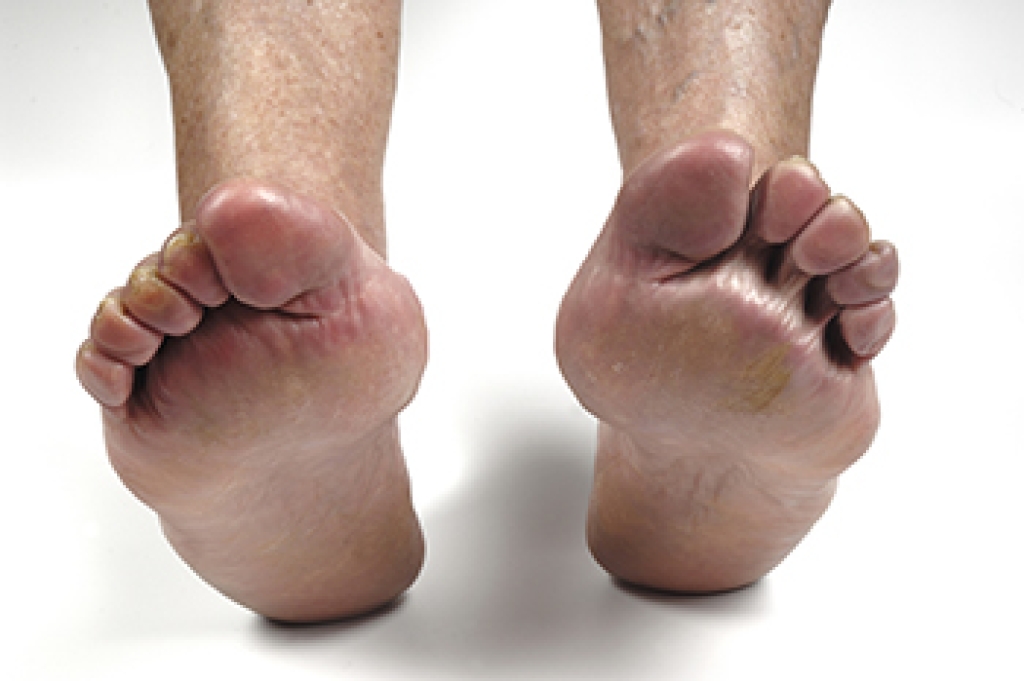
Managing an Achilles Tendon Rupture

An Achilles tendon rupture is a serious injury that affects walking, balance, and push-off strength. Management depends on the patient’s health, activity level, and how well the tendon ends line up. Conservative care may be recommended for some individuals, and usually involves immobilization in a boot or cast, followed by gradual motion and strengthening. This approach avoids surgery but requires careful protection and guided rehabilitation. Surgical repair may be advised for others, especially when the tendon has pulled far apart or when higher strength and function are desired. Surgery reconnects the tendon to restore tension and support healing, followed by structured rehabilitation. Both approaches aim to regain strength, flexibility, and a safe return to activity. Early diagnosis and proper treatment planning are key to good outcomes. If sudden heel pain, weakness, or difficulty pushing off occurs, it is suggested that you see a podiatrist for evaluation and guidance.

Achilles tendon injuries need immediate attention to avoid future complications. If you have any concerns, contact Michael Schwartzman, DPM of Illinois and Indiana . Our doctor can provide the care you need to keep you pain-free and on your feet.

What Is the Achilles Tendon?

The Achilles tendon is a tendon that connects the lower leg muscles and calf to the heel of the foot. It is the strongest tendon in the human body and is essential for making movement possible. Because this tendon is such an integral part of the body, any injuries to it can create immense difficulties and should immediately be presented to a doctor.

What Are the Symptoms of an Achilles Tendon Injury?

There are various types of injuries that can affect the Achilles tendon. The two most common injuries are Achilles tendinitis and ruptures of the tendon.

Achilles Tendinitis Symptoms

  • Inflammation
  • Dull to severe pain
  • Increased blood flow to the tendon
  • Thickening of the tendon

Rupture Symptoms

  • Extreme pain and swelling in the foot
  • Total immobility

Treatment and Prevention

Achilles tendon injuries are diagnosed by a thorough physical evaluation, which can include an MRI. Treatment involves rest, physical therapy, and in some cases, surgery. However, various preventative measures can be taken to avoid these injuries, such as:

  • Thorough stretching of the tendon before and after exercise
  • Strengthening exercises like calf raises, squats, leg curls, leg extensions, leg raises, lunges, and leg presses

If you have any questions please feel free to contact our offices located in West Chicago, IL and Whiting, IN . We offer the newest diagnostic tools and technology to treat your foot and ankle needs.

Read more about The Causes, Types, and Treatments of Achilles Tendon Injuries

What a Vascular Exam Tells Your Podiatrist About Foot Health

A vascular exam allows a podiatrist to assess how well blood is flowing to the feet and ankles. The exam often begins with observation of skin color, temperature, swelling, and changes in hair or nail growth that may signal reduced circulation. Pulses on the top of the foot and near the ankle are gently felt to evaluate arterial flow. The podiatrist gently presses on the skin of the toes to observe how quickly normal color returns, which reflects small vessel function. In some cases, a handheld device is used to listen to blood flow more clearly. These findings help identify circulation concerns that may affect healing, nerve health, or skin integrity. Vascular assessment is especially important for individuals with diabetes, wounds, leg pain, or slow-healing sores. If changes in foot color, temperature, or healing are noticed, it is suggested that you see a podiatrist for further evaluation and appropriate care.

Vascular testing plays an important part in diagnosing disease like peripheral artery disease. If you have symptoms of peripheral artery disease, or diabetes, consult with Michael Schwartzman, DPM from Illinois and Indiana . Our doctor will assess your condition and provide you with quality foot and ankle treatment.

What Is Vascular Testing?

Vascular testing checks for how well blood circulation is in the veins and arteries. This is most often done to determine and treat a patient for peripheral artery disease (PAD), stroke, and aneurysms. Podiatrists utilize vascular testing when a patient has symptoms of PAD or if they believe they might. If a patient has diabetes, a podiatrist may determine a vascular test to be prudent to check for poor blood circulation.

How Is it Conducted?

Most forms of vascular testing are non-invasive. Podiatrists will first conduct a visual inspection for any wounds, discoloration, and any abnormal signs prior to a vascular test.

 The most common tests include:

  • Ankle-Brachial Index (ABI) examination
  • Doppler examination
  • Pedal pulses

These tests are safe, painless, and easy to do. Once finished, the podiatrist can then provide a diagnosis and the best course for treatment.

If you have any questions please contact our offices located in West Chicago, IL and Whiting, IN . We offer the newest diagnostic and treatment technologies for all your foot and ankle needs.

Read more about Vascular Testing in Podiatry

Connect With Us

scroll to top